この記事は英語で書かれています。日本語版はまだ準備中です。
AYANA Bali’s Hotel Composting Program: How Circular Agriculture Works at AYANA Farm
AYANA Bali operates a circular, chemical-free composting program on-site at its two-hectare AYANA Farm. Organic waste from harvests, landscaping, and resort operations is processed in the farm's on-site compost facility into living soil that grows the next crop — returning nutrients to the earth at every stage. Composting as a core practice is central to how AYANA Bali approaches sustainability on the ground.
Every stage of the system feeds the next. Compost enriches soil, soil supports crops, crops are harvested and sent to our restaurants and bars, and what remains returns to compost — from kitchen scraps to landscape trimmings to horse manure from our stables.
This article explains how that process works, why it matters, and how guests can experience it firsthand.
Sustainability at Our Core: Why Healthy Soil Comes First

AYANA Farm is the on-site farm within AYANA Bali, located in Jimbaran. Unlike the volcanic highland soils Bali is often associated with, the farm sits on Bali's southern limestone peninsula next to the Indian Ocean — lowland terrain that is naturally dry and low in organic matter. That makes building and maintaining healthy soil not just a priority, but a constant, active commitment.
At AYANA Farm, that commitment rests on a clear foundation: no synthetic fertilisers, no chemical pesticides, no shortcuts. The investment goes into the soil itself, season after season.
Composting is how that commitment is kept. It allows the farm to:
- Return nutrients to the earth rather than depleting them with each harvest
- Build the microbial life that keeps soil fertile and resilient over time
- Reduce reliance on synthetic inputs at every stage of the growing process
Beyond the composting system, the farm's wider infrastructure follows the same principles. The worm composting beds use upcycled bathtubs salvaged from past property renovations, solar panels provide a source of renewable energy across the farm, and our pond — maintained without chemicals and filtered entirely through natural processes — provides a water source for local wildlife. These are a few visible examples of the repurposed materials and renewable energy systems that keep the farm's environmental impact low across the whole site, not just in the fields.
For a broader look at sustainability across AYANA Bali, see our sustainability overview.
How AYANA Bali's Circular Composting System Works

At AYANA Farm, the composting system draws on organic matter from across the resort property as well as rice straw, husks, and manure sourced from local Balinese farmers — all feeding back into the soil that grows the next crop. The table below shows how each stage connects.
| Stage | What Happens | Where It Comes From / Goes |
|---|---|---|
| 1. Collection | Organic waste from across the property — including crop trimmings, garden cuttings, and horse manure from the resort stables — is separated and directed toward the compost facility. The farm also sources rice straw, husks, and manure from local Balinese farmers. | Farm harvests, landscaping, resort operations, stables, local Balinese farmers |
| 2. Composting | Material is composted on-site using a combination of hot composting, worm composting, and compost tea, using only natural materials and processes. | On-site compost facility within the farm |
| 3. Soil Enrichment | Finished compost is returned to the farm beds, rebuilding organic matter and microbial life across our growing plots. | Farm plots growing 130+ plant varieties |
| 4. Chemical-Free Growing | Enriched soil supports healthy crops without synthetic fertilisers or pesticides. | Vegetables, herbs, and edibles used across AYANA's restaurants and bars |
| 5. Harvest & Table | Produce is harvested at peak ripeness and brought directly to our kitchens. | Resort dining, cooking classes, and farm-to-table experiences |
| 6. Back to Compost | Trimmings and unused plant material re-enter the composting cycle, completing the loop. | Full circle back to Stage 1 |
Three composting methods sit at the heart of the system, each suited to a specific purpose:
- Hot compost — larger piles of layered organic matter that can reach 54–66°C, breaking down material quickly while eliminating weeds and pathogens.
- Worm compost (vermicompost) — run through upcycled bathtubs from past property renovations, the worms convert organic waste into a rich, dark humus that is particularly valuable for nurturing seedlings.
- Compost tea — finished compost steeped in water with a little molasses, producing a liquid teeming with beneficial bacteria, fungi, and microorganisms that is sprayed across the farm to support soil and plant health.
Together, these methods keep the soil alive and actively improving with every growing cycle — which is why the farm our guests walk through is more biodiverse and productive each season than the last.
Experiencing the Farm as a Guest

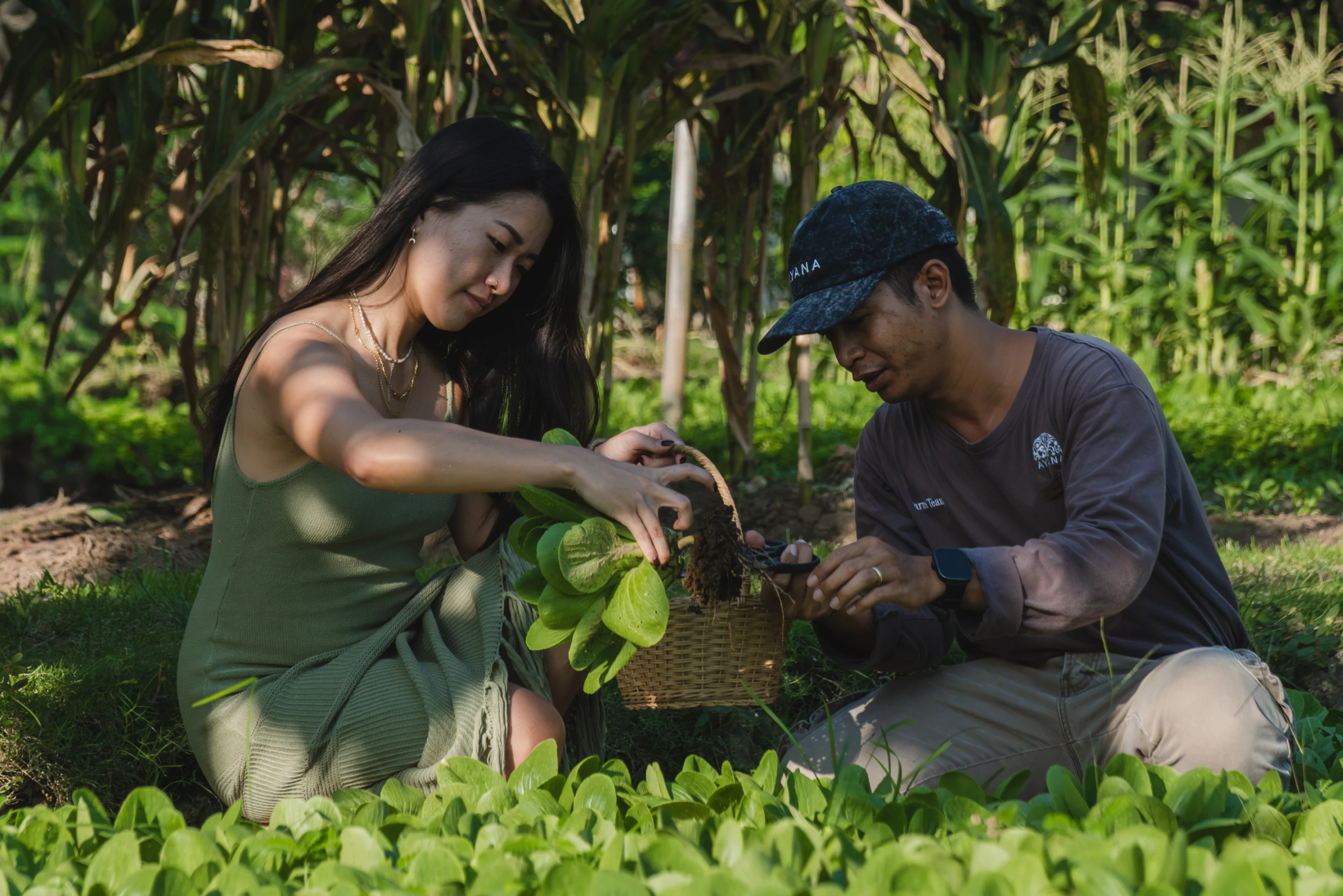
AYANA Farm offers a range of experiences that bring the farm's growing and composting practices within direct reach. Whether you have an hour or an afternoon, each one is designed to connect guests with the land, the produce, and the people who tend both — and they are among the more distinctive eco-friendly hotel Bali experiences available.
- AYANA Farm Walk — a guided journey through the farm's plant beds and diverse plant collections, with our team on hand to explain the methods behind what you see.
- Root Ball Farm Experience — a hands-on session where guests learn about soil health, create their own root balls, and plant seedlings in our Guest Garden.
- Farm-to-Bar Workshop — pick fresh herbs, fruits, and edible flowers straight from the garden and work with our mixologists to create seasonal drinks using what is growing that day.
- Gin Crafting Workshop — select your own botanicals directly from AYANA Farm and craft a personalised gin using seasonal flavours. Each session includes two cocktails and a 120ml bottle of your handcrafted gin or personalized cocktails to take home.
- Traditional Herbal Remedies — learn the art of making jamu, the ancient Indonesian wellness tradition with over a thousand years of history and UNESCO recognition, guided by an experienced herbalist from Jamu & Spice.
- Afternoon Tea at AYANA Farm — a relaxed, beautifully curated selection of teas, pastries, and seasonal bites made with produce grown just steps away, enjoyed in the heart of the farm.
For families, the farm is a particularly vivid teaching environment — one where children can see where food actually comes from, meet the people who grow it, and leave with a deeper connection to what ends up on their plate.
All bookable farm experiences are available at ayana.com/bali/experiences/ayana-farm.
Come and See It for Yourself

At AYANA Farm, the best way to understand what we do is to experience it directly. Every walk, every session, every meal that begins here is part of the same circle — soil, crop, table, and back again.
Book your place on an AYANA Farm experience and see the full circle for yourself.